

Not all sleep disorders are chronic. A significant proportion of individuals experience transient or short term insomnia in the context of identifiable precipitating factors including acute stress, environmental disruptions, illness, travel, or temporary life transitions. While short term sleep disruption is self limiting in many cases, its impact on daytime functioning, safety, and wellbeing can […]
Category: 💊Insomnia

Pharmacological Mechanisms and the Evidence for Sleep Initiation Treatment
Insomnia disorder, defined by persistent difficulty falling asleep, staying asleep, or experiencing restorative sleep despite adequate opportunity, with consequent daytime impairment, affects approximately ten percent of adults as a chronic condition and a substantially larger proportion episodically. The impact of chronic insomnia on health, functioning, and quality of life is pervasive, with impairments in cognitive […]

Screen Exposure Before Bedtime and Insomnia: The Blue Light Disruption of the Digital Age
The Sleep Crisis Nobody Expected: How Screens Rewrote Sleep Neurobiology The proliferation of light emitting screens, smartphones, tablets, laptops, desktop monitors, and televisions, into the final hours before sleep represents a neurobiological experiment of extraordinary scale whose results are increasingly clear: chronic pre bedtime screen exposure disrupts circadian melatonin secretion, delays sleep onset, reduces total […]

Medical Conditions and Insomnia: Chronic Pain, Asthma, and Hormonal Disruptions That Rob Your Sleep
The Bidirectional Relationship Between Medical Illness and Insomnia Chronic medical conditions are among the most prevalent and most clinically challenging drivers of insomnia, affecting tens of millions of Americans whose underlying health conditions produce sleep disruption through direct physiological mechanisms, pain that prevents comfortable positioning and interrupts sleep, respiratory disease that produces nocturnal breathlessness and […]

Medication-Induced Insomnia: When Your Prescription Steals Your Sleep
The Hidden Insomnia Trigger in Plain Sight Across the tens of millions of Americans who struggle with chronic insomnia, a substantial and systematically underappreciated proportion have sleep disruption driven, at least in part, by medications they take for other conditions. This medication induced insomnia is frequently misidentified as primary insomnia, anxiety driven sleep disruption, or […]

Stimulants, Caffeine, and Nicotine: How Daily Habits Produce Nighttime Insomnia
The Stimulant Sleep Connection: More Significant Than Most People Realize The role of stimulant substances in driving insomnia is consistently underestimated by patients and, to a meaningful degree, by clinicians. In a culture that has normalized caffeine consumption at levels that would have been considered extraordinary a generation ago, and where nicotine use remains prevalent […]
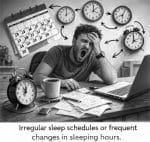
Irregular Sleep Schedules and Insomnia: How Circadian Disruption Destroys Restorative Sleep
The Body Clock: A Biological Imperative That Modern Life Ignores Deep within the hypothalamus, a small cluster of approximately 20,000 neurons called the suprachiasmatic nucleus (SCN) orchestrates one of biology’s most fundamental rhythms, the circadian cycle that governs the timing of sleep, wakefulness, hormonal secretion, body temperature, metabolism, and dozens of other physiological processes across […]

Insomnia Driven by Chronic Stress and Anxiety: Why an Overactive Mind Steals Your Sleep
When the Brain Refuses to Power Down Of all the factors that disrupt human sleep, chronic stress and anxiety stand apart as the most prevalent, the most neurobiologically complex, and the most self reinforcing. Unlike insomnia caused by noise, temperature, or a specific short term stressor, stress and anxiety driven insomnia creates a feedback loop […]
Insomnia: Causes, Consequences, and Evidence-Based Treatment Options
The Scope of Insomnia: America’s Most Common Sleep Problem Insomnia is the most prevalent sleep disorder in the United States, affecting an estimated 30–35% of adults with at least occasional insomnia symptoms and 10–15% with chronic insomnia disorder, defined as difficulty initiating or maintaining sleep, or early morning awakening with inability to return to sleep, […]