

Pre Procedural Anxiety: A Ubiquitous Clinical Challenge
The hours leading up to a medical or surgical procedure represent one of the most anxiety provoking clinical experiences that patients encounter throughout their healthcare journey. Whether the upcoming procedure is a brief outpatient colonoscopy, a complex cardiac surgery requiring general anesthesia, or a diagnostic procedure such as a biopsy or MRI, the anticipation of physical vulnerability, pain, loss of control, and uncertainty about outcomes activates the same neurobiological fear response as any genuine threat. Patients undergoing even routine procedures frequently report anxiety as one of their most distressing concerns, and this anxiety is not merely a subjective inconvenience, it produces measurable physiological consequences that can directly affect procedural outcomes and recovery.
Elevated pre procedural anxiety is associated with increased intraoperative anesthetic requirements, higher rates of postoperative pain, delayed recovery from anesthesia, increased rates of postoperative nausea and vomiting, prolonged hospital stays, and negative patient experience ratings that have both human and institutional consequences. Conversely, effective pre procedural anxiolysis has been shown to reduce anesthetic requirements, improve patient cooperation and procedural tolerance, shorten recovery times, and improve patient satisfaction. These clinical and operational benefits provide a compelling justification for systematic pre procedural anxiety management as a standard component of perioperative care.
Lorazepam’s Profile for Pre Procedural Use
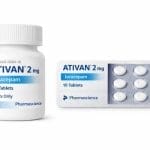
Ativan (lorazepam) is widely used as a pre procedural anxiolytic and sedative agent in a range of clinical settings, selected for this application on the basis of pharmacological properties that are particularly well matched to the clinical requirements of the perioperative context. Its reliable and consistent oral and sublingual bioavailability allows effective outpatient pre procedural dosing without the need for intravenous access, enabling anxiolysis to be initiated before the patient arrives at the clinical facility. Its onset of action, 30 to 60 minutes following oral administration, and 15 to 30 minutes following sublingual dosing, aligns well with the practical timing requirements of pre procedural preparation.
The anterograde amnestic property of lorazepam, its ability to impair the formation of new explicit memories for events occurring after drug administration, is particularly clinically valuable in the perioperative setting. Many patients who undergo procedures with conscious sedation or local anesthesia experience elements of the procedure that are unpleasant, uncomfortable, or frightening. Ativan induced anterograde amnesia reduces the likelihood of these intraoperative experiences being retained as explicit memories that could generate lasting procedural aversion, reduce willingness to undergo necessary future procedures, and contribute to post procedural psychological distress. This amnestic effect is a genuine therapeutic benefit distinct from the anxiolytic and sedative effects that primarily serve comfort during the procedure itself.
Standard Dosing Protocols for Procedural Sedation
For outpatient procedural sedation, lorazepam is typically administered orally or sublingually at doses of 1 to 2 mg taken 45 to 90 minutes before the procedure. Lower doses of 0.5 to 1 mg are recommended for elderly patients, those with hepatic impairment, individuals with no prior benzodiazepine exposure who may be unusually sensitive, and those undergoing shorter or less anxiety provoking procedures where full procedural cooperation is more important than deep anxiolysis. In inpatient surgical settings where intravenous access is available, intravenous lorazepam at 0.02 to 0.05 mg/kg allows titrated anxiolysis with more precise dose management and faster onset, and may be combined with other anesthetic premedications as part of a balanced premedication regimen.
Patients who need to buy Lorazepam for pre procedural anxiety should obtain their prescription from their proceduralist, anesthesiologist, or primary care physician sufficiently in advance of the procedure to ensure the medication is available. Crucially, all patients taking pre procedural lorazepam must arrange for a responsible adult to escort them to and from the procedure, as the sedative, amnestic, and psychomotor impairing effects of lorazepam render independent driving unsafe for at least four to six hours following administration, and often longer in elderly patients or those receiving higher doses.
MRI Claustrophobia and Diagnostic Procedure Anxiety
Claustrophobic anxiety during magnetic resonance imaging represents one of the most practically significant applications of pre procedural lorazepam outside the surgical context. MRI examination in a closed bore scanner requires patients to lie still in a confined, noisy environment for periods ranging from 20 minutes to over an hour, conditions that are intolerable for individuals with claustrophobia, resulting in an examination failure rate estimated at 2 to 5 percent that represents significant costs in terms of delayed diagnosis, re examination scheduling, and the use of open bore or wide bore alternatives that may provide inferior diagnostic quality.
Oral lorazepam 1 to 2 mg taken 60 minutes before a claustrophobia limited MRI examination has been demonstrated to enable successful examination completion in the large majority of previously unable patients, converting examination failures into diagnostic successes through pharmacological management of a specific and well defined psychological barrier to procedure tolerance. The anxiolytic and mild sedative effects of lorazepam reduce the claustrophobic fear to a tolerable level, while the anterograde amnestic effect reduces the distressing memories of the enclosed environment that might otherwise reinforce future claustrophobic avoidance.
Dental Procedures and Procedural Phobia
Dental anxiety affects a substantial minority of the adult population with sufficient severity to impair access to necessary dental care, contributing to preventable oral disease and its systemic consequences. For patients whose dental anxiety is beyond the management capacity of behavioral de escalation and nitrous oxide sedation, lorazepam provides an effective pharmacological option for outpatient dental anxiolysis that can enable access to needed dental treatment that would otherwise be avoided indefinitely.
The combination of anxiolysis, mild sedation, and anterograde amnesia that lorazepam produces is particularly well suited to the dental context, where the anxiety is predominantly anticipatory and procedural rather than driven by a chronic psychological disorder, and where the clinical goal is enabling a specific procedure rather than treating an underlying condition. A carefully prescribed single dose, taken with a responsible adult escort arranged, can transform the dental experience from one of dread and avoidance into one that is manageable and that gradually reduces the conditioned fear through repeated successful exposures.
Post Procedural Considerations and Monitoring
The post procedural period following lorazepam assisted sedation requires attention to the residual pharmacological effects that persist after the acute anxiolytic and amnestic peaks have passed. Psychomotor impairment, impaired judgment, and mild cognitive effects persist for several hours beyond the peak sedative effect and are not reliably detected by the patient through subjective experience, individuals commonly feel more alert and capable than they actually are in the post sedation period. This subjective objective mismatch requires that discharge criteria include objective assessments of alertness and coordination rather than relying on patient self assessment.
The responsible adult escort who accompanies the patient on the day of the procedure should be briefed on the expected duration and nature of post procedural lorazepam effects, including the likelihood of amnesia for the immediate post procedural period, to enable appropriate supervision and to prevent the patient from engaging in activities, driving, operating machinery, making important decisions, signing legal documents, that require the cognitive and psychomotor capacities that lorazepam transiently impairs.
Conclusion
Ativan (lorazepam) is a well established, clinically effective, and widely used pre procedural anxiolytic and sedative agent that enhances procedural tolerance, reduces physiological stress responses, provides anterograde amnesia for unpleasant procedural experiences, and enables access to important diagnostic and therapeutic procedures for patients whose anxiety would otherwise prevent participation. Administered at appropriate doses with mandatory escort arrangements, careful monitoring, and clear patient education about post procedural impairment, buy Ativan for pre procedural sedation represents a clinically sound and patient centered approach to one of the most common barriers to healthcare access and positive procedural experience.