
When Anxiety and Insomnia Converge
Anxiety related insomnia occupies a distinctive and clinically challenging position in the sleep medicine landscape, a condition in which two mutually reinforcing pathologies interact to create a combined syndrome whose severity and treatment resistance frequently exceed what either condition would produce independently. The neurobiological architecture shared by anxiety and insomnia, both involve dysregulation of arousal systems, altered amygdala reactivity, impaired prefrontal regulatory function, and HPA axis hyperactivation, means that each condition actively perpetuates the other through mechanisms that cannot be fully disentangled. Treating the anxiety alone without addressing the insomnia, or the insomnia without addressing the anxiety, typically produces partial improvement at best and leaves the unaddressed component to sustain the overall syndrome.
Severe insomnia related to anxiety, as opposed to mild or moderate anxiety related sleep difficulties, is characterized by sleep impairment that is profoundly disruptive to daily functioning: total sleep time reduced by two or more hours from the individual’s normal baseline, sleep latency of an hour or more on most nights, or such severe sleep fragmentation that even the sleep that is obtained is subjectively unrestorative and objectively poor in quality. At this level of severity, the cumulative sleep debt creates cognitive and emotional impairment that is itself a significant clinical problem requiring attention, and the urgency of restoring functional sleep creates a clear clinical justification for pharmacological intervention.
Lorazepam’s Dual Action on Anxiety and Sleep
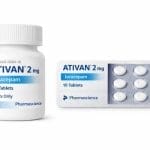
Ativan (lorazepam) offers a clinically significant pharmacological advantage in the management of severe anxiety related insomnia: its GABAergic mechanism simultaneously addresses both the anxiety component and the insomnia component of the combined syndrome through a single pharmacological action. By enhancing inhibitory neurotransmission in the amygdala and its output pathways, lorazepam reduces the anxiety driven hyperarousal that prevents sleep; by enhancing inhibitory tone in the sleep promoting circuits of the hypothalamus and brainstem, it directly facilitates the neurophysiological transition from wakefulness to sleep. This dual therapeutic action is mechanistically appropriate for the combined anxiety insomnia syndrome in a way that agents addressing only one dimension, a pure anxiolytic or a pure hypnotic, cannot fully achieve.
The intermediate half life of lorazepam, approximately 10 to 20 hours, is both an advantage and a consideration in the context of sleep management. On the positive side, this half life provides anxiolytic coverage that extends through the night, addressing the middle of the night anxiety that generates nocturnal awakenings and early morning awakening, two of the most disruptive features of severe anxiety related insomnia. On the consideration side, residual morning sedation and cognitive impairment are more likely with lorazepam than with shorter acting hypnotics such as zolpidem, and patients whose occupational or caregiving responsibilities require early morning cognitive sharpness may find these residual effects clinically limiting at standard hypnotic doses.
Assessment Before Pharmacological Sleep Management
Before initiating lorazepam for severe anxiety related insomnia, a thorough clinical assessment is essential to confirm the diagnosis, identify contributing factors, and screen for comorbid conditions that might modify the treatment approach. A comprehensive sleep history should characterize the nature, duration, and severity of the insomnia, onset latency, number and duration of nocturnal awakenings, total sleep time, early awakening, daytime consequences, and establish its temporal relationship with anxiety symptoms and identifiable stressors. The assessment should also screen for common conditions that independently disrupt sleep and that would not be adequately addressed by lorazepam: obstructive sleep apnea, restless legs syndrome, periodic limb movement disorder, and circadian rhythm disorders.
The use of standardized assessment tools, including the Insomnia Severity Index, the Pittsburgh Sleep Quality Index, and an anxiety screening instrument such as the Generalized Anxiety Disorder 7 item scale, provides quantitative baseline measurements that allow objective tracking of treatment response across both the insomnia and the anxiety dimensions of the presenting problem. These baseline measurements also facilitate the clinical communication and treatment record documentation that are important aspects of responsible benzodiazepine prescribing.
Dosing Strategies for Sleep Specific Use
For the specific indication of severe anxiety related insomnia, lorazepam is typically prescribed at doses of 0.5 to 2 mg taken 20 to 30 minutes before the intended sleep time. Starting at the lower end of this range, 0.5 mg, and titrating upward based on therapeutic response over the first week of treatment allows assessment of individual sensitivity and minimizes the risk of excessive morning residual sedation at doses that may be higher than necessary. The target is the lowest dose that produces adequate sleep improvement, not the maximum tolerated dose.
Patients who need to buy Ativan for anxiety related insomnia should receive explicit guidance about the critical requirement of ensuring at least seven to eight hours of remaining sleep time before taking the medication, a safety precaution that reduces the risk of residual sedation and cognitive impairment affecting the following morning’s activities, including driving. The prescribing clinician should also provide guidance about the avoidance of alcohol, which potentiates lorazepam’s CNS depressant effects, and about the signs of excessive sedation that should prompt contact with the clinical team and dose reduction.
CBT I and Anxiety Treatment as Essential Partners
The pharmacological management of severe anxiety related insomnia with lorazepam achieves its full potential only when integrated with the evidence based treatments that address the cognitive and behavioral maintaining factors of both the insomnia and the anxiety components of the syndrome. CBT I, the established first line treatment for chronic insomnia, directly addresses the conditioned hyperarousal, sleep performance anxiety, maladaptive sleep beliefs, and behavioral patterns that perpetuate insomnia independently of the underlying anxiety. CBT for anxiety disorders targets the cognitive distortions, avoidance behaviors, and worry patterns that sustain anxiety and generate the nighttime hyperarousal that disrupts sleep.
The sequencing of these interventions relative to lorazepam therapy requires clinical judgment tailored to the severity of the presenting syndrome. For patients with severe, acutely impairing anxiety related insomnia, a short initial period of lorazepam therapy that restores functional sleep and reduces the anxiety driven hyperarousal may be necessary before the cognitive engagement required by CBT I and anxiety focused CBT becomes practically accessible. Once a functional baseline has been restored pharmacologically, the progressive introduction of CBT techniques alongside gradual lorazepam reduction represents the optimal integrated management trajectory.
Sleep Hygiene Optimization
Foundational sleep hygiene practices represent an important complement to lorazepam therapy for anxiety related insomnia, addressing modifiable behavioral and environmental factors that contribute to the insomnia independently of the anxiety mechanism. Consistent sleep and wake timing seven days per week stabilizes the circadian system and maximizes homeostatic sleep pressure at bedtime, supporting the pharmacological sleep induction that lorazepam provides. Restriction of bed use to sleep only, the stimulus control principle, prevents the erosion of the bed sleep association that occurs when individuals spend prolonged periods of wakefulness in bed, reducing the conditioned arousal that competes with lorazepam’s sleep promoting effect.
Temperature management, avoidance of blue light in the pre sleep period, caffeine restriction after noon, and the establishment of a consistent relaxing pre sleep routine collectively create the behavioral and environmental substrate within which lorazepam’s pharmacological effect can produce its full therapeutic benefit. These practices also build the behavioral sleep infrastructure that will sustain sleep quality after lorazepam is eventually withdrawn, making them both immediately synergistic with pharmacological treatment and critical for long term sleep health maintenance.
Conclusion
Severe insomnia related to anxiety is a clinically significant and often inadequately managed condition that demands a treatment approach capable of addressing both its neurobiological components simultaneously. Ativan’s dual anxiolytic and sedative mechanism, intermediate half life, and well established clinical track record make it a pharmacologically rational and evidence informed choice for this specific indication. When prescribed for carefully defined short term periods, integrated with CBT I and anxiety focused psychological therapy, and implemented alongside systematic sleep hygiene optimization, buy Lorazepam within a supervised treatment plan provides meaningful and compassionate relief from one of the most distressing consequences of the anxiety insomnia comorbidity.