

Acute Stress and Agitation in Clinical Practice
Acute stress and agitation present across an extraordinarily diverse range of clinical contexts, from the primary care consultation of a patient in the grip of a sudden life crisis to the emergency department evaluation of a delirious patient whose behavioral dyscontrol poses imminent risks to themselves and clinical staff. Despite this contextual diversity, the common neurobiological thread is one of central nervous system hyperarousal: excessive excitatory neural activity in limbic, hypothalamic, and cortical circuits that overwhelms the regulatory capacity of inhibitory systems, generating the subjective experience of overwhelming stress and the behavioral manifestations of agitation.
Clinically significant acute agitation is defined by the presence of excessive motor activity, emotional dysregulation, and a heightened state of arousal that manifests as restlessness, pacing, vocal outbursts, irritability, or in its more severe forms, combative behavior directed at staff or self. In the emergency setting, agitation can rapidly escalate to violence, making rapid and effective pharmacological management a clinical priority that simultaneously serves patient welfare and environmental safety. In less acute outpatient settings, acute stress and agitation may be less dramatic but nonetheless significantly impairing, preventing the individual from functioning effectively and creating urgent unmet clinical need for symptomatic relief.
Why Ativan Is Particularly Well Suited to Acute Management
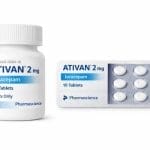
Ativan (lorazepam) possesses a combination of pharmacological properties that make it particularly well suited to the acute management of stress and agitation across a range of clinical settings. Its potent enhancement of GABAergic inhibitory neurotransmission produces dose dependent calming that directly reduces the neuronal hyperexcitability underlying agitated states, while its multiple routes of administration, oral, sublingual, intramuscular, and intravenous, allow dose delivery to be matched to the clinical context and the patient’s level of cooperation and physical condition.
The intramuscular route deserves particular emphasis in the acute agitation context, as it allows effective drug delivery when intravenous access has not yet been established and when oral administration is impractical due to the patient’s level of agitation or cooperation. Intramuscular lorazepam is reliably and completely absorbed, producing peak plasma concentrations within 60 to 90 minutes of injection and achieving calming effects that, while somewhat slower than intravenous administration, are clinically reliable and substantially more rapid than oral routes. This makes intramuscular lorazepam a cornerstone of pharmacological management of acute agitation in emergency settings worldwide.
Acute Stress in the Outpatient Setting
In the outpatient primary care and mental health setting, acute stress presenting as severe distress, emotional dysregulation, and functional impairment represents one of the most common precipitants for urgent clinical consultation. The individual who presents in acute crisis following a sudden bereavement, a relationship breakdown, a threatening medical diagnosis, or a financial emergency may be so overwhelmed by their emotional and physiological stress response that they cannot engage meaningfully with the counseling and practical support they urgently need. Short term lorazepam in this context provides the symptomatic scaffolding that restores sufficient cognitive and emotional regulatory capacity for meaningful engagement with support services.
The clinical decision to prescribe Ativan for acute outpatient stress requires a careful assessment that rules out contraindications, particularly substance use disorders that substantially elevate the risk of benzodiazepine misuse, establishes the specific clinical indication and expected duration of treatment, and identifies the concurrent or subsequent interventions that will address the underlying stressors and psychological response. Patients who need to buy Ativan for this purpose should receive the prescription within a clinical encounter that includes this comprehensive assessment, not as a telephone or portal prescription request that bypasses the evaluation process.
Agitation in Medical and Psychiatric Inpatient Settings
Inpatient medical and psychiatric settings present specific agitation management challenges that differ from those of the emergency department or outpatient context. In general medical wards, agitation most commonly arises as a feature of delirium, an acute confusional state driven by medical illness, medication effects, or systemic dysfunction, or as a consequence of undertreated pain, anxiety, or the disorienting and distressing experience of acute hospitalization itself. The management of delirium associated agitation is a clinical area of active debate, with some evidence suggesting that benzodiazepines, particularly lorazepam, may worsen the underlying cognitive impairment of delirium in certain patient populations, particularly older adults with dementia, though their role in delirium driven by alcohol or sedative withdrawal remains well established and essential.
In inpatient psychiatric settings, lorazepam is a standard component of acute agitation management protocols, often used in combination with antipsychotic medications for patients whose agitation arises in the context of acute psychosis, mania, or severe personality disorder. The combination of lorazepam with haloperidol or a second generation antipsychotic provides complementary mechanisms, GABAergic calming from lorazepam and dopaminergic regulation from the antipsychotic, that together produce more effective and rapid agitation control than either agent alone in many acute psychiatric presentations.
De escalation and Non Pharmacological Approaches
Pharmacological management of acute stress and agitation should always be considered within the context of non pharmacological de escalation approaches that represent the first line response in most clinical settings. Verbal de escalation, using calm, non threatening, empathetic communication to reduce the patient’s perceived threat level and restore a sense of safety and control, is the most effective single intervention for mild to moderate agitation and should precede pharmacological management in all patients who retain sufficient cognitive and communicative capacity for meaningful verbal interaction.
Environmental de escalation, reducing sensory stimulation, removing threatening stimuli, providing a private and quiet space, and ensuring the presence of trusted support persons where appropriate, complements verbal de escalation by reducing the external triggers and maintaining factors of the agitated state. When these non pharmacological approaches are insufficient or when the severity of agitation presents immediate safety risks that preclude the time required for behavioral de escalation, lorazepam’s rapid efficacy by intramuscular or intravenous routes provides the pharmacological complement to behavioral management that enables safe clinical resolution of the agitation episode.
Duration and Monitoring for Acute Use
The defining clinical characteristic of Ativan use for acute stress and agitation is its intended brevity. Unlike the chronic anxiety disorder applications where lorazepam serves as a bridging agent over weeks, the acute stress and agitation indication typically involves either a single acute dose in the emergency or acute psychiatric context, or a short course of days to no more than two weeks in the outpatient stress management context. This brief duration substantially reduces the risk of tolerance development, physical dependence, and the withdrawal complications that are the principal safety concerns with benzodiazepine therapy.
Monitoring during even brief Ativan therapy for acute stress or agitation should include assessment of clinical response, vital signs where appropriate to the setting, and evaluation of any signs of unexpected drug interactions or adverse effects. In elderly patients and those with hepatic impairment, the reduced dosing requirements and extended monitoring periods that characterize benzodiazepine use in these populations apply regardless of the brief intended duration of treatment.
Conclusion
Ativan (lorazepam) is among the most clinically versatile and reliably effective pharmacological agents available for the short term management of acute stress and agitation. Its multiple routes of administration, potent and rapid GABAergic mechanism, intermediate half life without active metabolites, and favorable drug interaction profile collectively make it an indispensable tool in emergency medicine, inpatient psychiatry, and outpatient mental health care. Those who require buy Ativan for acute stress management should ensure that this takes place within a clinical framework that includes proper indication assessment, appropriate dose selection, and a clearly defined plan for the brief, targeted use that maximizes benefit while minimizing risk in this important clinical indication.