

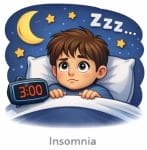
The Scope of Insomnia: America’s Most Common Sleep Problem
Insomnia is the most prevalent sleep disorder in the United States, affecting an estimated 30–35% of adults with at least occasional insomnia symptoms and 10–15% with chronic insomnia disorder, defined as difficulty initiating or maintaining sleep, or early morning awakening with inability to return to sleep, occurring at least three nights per week for at least three months, causing clinically significant distress or impairment in daily functioning. These numbers represent tens of millions of Americans who are not getting the restorative sleep their brains and bodies require.
The consequences of chronic insomnia extend far beyond next day fatigue. Sustained sleep disruption is associated with increased risk of depression and anxiety disorders, impaired immune function, elevated inflammatory markers, insulin resistance, cardiovascular disease, and cognitive decline. The occupational impact is substantial: concentration, decision making, reaction time, and creative problem solving are all significantly impaired by chronic sleep deprivation, contributing to reduced productivity, increased errors, and elevated accident risk. Automobile accidents involving drowsy drivers are responsible for thousands of deaths annually in the United States.
Insomnia is classified as primary (not caused by another medical or psychiatric condition) or secondary (arising in the context of pain, depression, anxiety, GERD, sleep apnea, or other conditions). This distinction matters for treatment planning: secondary insomnia often improves when the underlying condition is adequately treated. However, insomnia frequently becomes self perpetuating, establishing conditioned arousal patterns (associating bed with wakefulness, anxiety about sleep) that persist even after the initial triggering condition resolves. This perpetuation mechanism is why behavioral and pharmacological sleep treatment is often needed even when an underlying cause is identified.
Z Drugs and Benzodiazepines: Pharmacological Sleep Aids
Pharmacological treatment of insomnia encompasses several drug classes with different mechanisms, pharmacokinetic profiles, and clinical applications. The ‘z drugs’, non benzodiazepine sedative hypnotics acting at GABA A receptors, and traditional benzodiazepine hypnotics are the most commonly prescribed medications for acute and short term insomnia management.
Zolpidem (Ambien) is the most widely prescribed sleep medication in the United States, accounting for tens of millions of prescriptions annually. Patients who buy Ambien online from a licensed certified pharmacy gain access to a fast acting sleep aid (onset 15–30 minutes) that effectively reduces sleep onset latency. Standard Ambien (5–10mg) is indicated for sleep onset insomnia; Ambien CR (extended release 6.25–12.5mg) addresses both sleep onset and sleep maintenance. The FDA requires sex specific dosing, 5mg for women and 5–10mg for men, due to documented slower zolpidem clearance in women, with lower starting doses for patients who must drive the morning after taking the medication.
Eszopiclone (Lunesta) is the only z drug with FDA approval for insomnia without duration restrictions, approved for long term use. Many patients who buy Lunesta online from certified pharmacies appreciate its consistent sleep onset and maintenance benefits without the time limited prescribing that applies to most hypnotics. Zaleplon (Sonata), with its ultra short half life, is particularly useful for middle of the night insomnia when patients awaken and cannot return to sleep, its brief duration allows middle of the night dosing with minimal next morning impairment.
Among traditional benzodiazepine hypnotics, temazepam (Restoril) remains widely used for insomnia, particularly for patients who benefit from both sleep onset and sleep maintenance coverage. Patients who buy Restoril online through their licensed pharmacy find it effective for insomnia associated with the anxiety component that makes sleep onset difficult. All z drugs and benzodiazepine hypnotics carry FDA warnings about complex sleep behaviors (sleepwalking, sleep driving), next morning impairment, and dependence risk with extended use.
Non Scheduled Insomnia Treatments: Melatonin Agonists and Orexin Antagonists
The treatment landscape for insomnia has expanded significantly beyond sedative hypnotics. Suvorexant (Belsomra) and lemborexant (Dayvigo) are orexin receptor antagonists, an entirely novel mechanism that blocks the wake promoting orexin/hypocretin system rather than enhancing sedation. By specifically inhibiting wakefulness rather than inducing sedation, these agents produce sleep with a more natural quality and without the respiratory depression concerns of GABA enhancing agents. They are FDA approved for both sleep onset and sleep maintenance insomnia and represent an important alternative for patients who cannot use or do not respond to z drugs.
Ramelteon (Rozerem) is a melatonin receptor agonist acting at MT1 and MT2 receptors in the suprachiasmatic nucleus, the brain’s circadian pacemaker. It specifically promotes sleep onset by signaling darkness to the circadian system, shortening sleep onset latency without producing sedation, dependence, or next morning impairment. It is the only prescription sleep medication with no abuse potential or scheduled controlled status, making it a particularly appropriate option for patients with substance use histories or for elderly patients.
Low dose doxepin (Silenor, 3–6mg), far below its antidepressant doses, is FDA approved for sleep maintenance insomnia through histamine H1 antagonism. Unlike antihistamine OTC sleep aids that produce tolerance rapidly, clinical trial data with low dose doxepin demonstrate maintained efficacy through the treatment period without next morning sedation at these low doses.
Cognitive Behavioral Therapy for Insomnia: The Durable Solution
Cognitive Behavioral Therapy for Insomnia (CBT I) is the gold standard treatment for chronic insomnia, recommended as first line therapy by the American College of Physicians and all major sleep medicine societies, preferred over pharmacological treatment for chronic cases. CBT I produces sleep improvements that are comparable to or greater than those from sleep medications during the active treatment period, and superior to medications in long term follow up after treatment ends, addressing the perpetuating factors that maintain chronic insomnia rather than temporarily suppressing symptoms.
CBT I comprises several evidence based components: sleep restriction therapy (temporarily limiting time in bed to consolidate sleep and rebuild sleep drive); stimulus control (re associating the bed with sleepiness through consistent use patterns and eliminating wakefulness associated activities in bed); sleep hygiene optimization; cognitive restructuring of dysfunctional sleep beliefs and catastrophizing about sleep; and relaxation techniques. The combination of these components typically produces meaningful sleep improvement within 4–6 weeks.
For patients with acute insomnia, triggered by identifiable stressors, situational anxiety, or short term disruptions, pharmacological treatment with licensed pharmacy obtained medications (whether buying Ambien online or Lunesta online from a certified dispensary) provides appropriate short term support. For chronic insomnia where psychological perpetuating factors have become established, CBT I addresses the fundamental maintaining mechanisms. The optimal approach for many patients is combined treatment, pharmacological support during the acute phase while CBT I skills are being established, with gradual medication tapering as behavioral gains consolidate.
Special Populations and Long Term Insomnia Management
Elderly patients with insomnia require specific prescribing considerations. The American Geriatrics Society Beers Criteria lists benzodiazepines and z drugs as potentially inappropriate medications in older adults due to elevated risks of falls, fractures, cognitive impairment, and motor vehicle accidents, reflecting age related enhanced CNS sensitivity to sedative agents. Non sedating alternatives (ramelteon, suvorexant, low dose doxepin) are preferred first line pharmacological options for elderly insomnia, with CBT I strongly recommended as the primary treatment approach.
Pregnancy associated insomnia is extremely common, particularly in the third trimester. Non pharmacological approaches, sleep hygiene, positional modifications for physical comfort, relaxation techniques, CBT I, are first line. When pharmacological treatment is necessary, the risk benefit calculation for any specific agent requires obstetrical consultation.
For patients with comorbid depression or anxiety driving insomnia, addressing the underlying psychiatric condition is essential. SSRIs and SNRIs can improve insomnia when depression or anxiety is the primary driver, though some SSRIs suppress REM sleep and may worsen certain sleep quality dimensions. Trazodone, a sedating antidepressant used off label at low doses for insomnia, is widely prescribed for insomnia associated with depression and anxiety. Consistent, accessible medication management through licensed certified pharmacies, whether patients buy their prescribed sleep aids online for home delivery or through local dispensing, supports the long term treatment adherence that chronic insomnia management requires.
Related posts:
 Insomnia Driven by Chronic Stress and Anxiety: Why an Overactive Mind Steals Your Sleep
 Irregular Sleep Schedules and Insomnia: How Circadian Disruption Destroys Restorative Sleep
 Stimulants, Caffeine, and Nicotine: How Daily Habits Produce Nighttime Insomnia
 Pharmacological Mechanisms and the Evidence for Sleep Initiation Treatment