

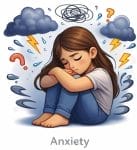
Understanding Anxiety Disorders: More Than Just Worry
Anxiety disorders are the most prevalent mental health conditions in the United States, collectively affecting more than 40 million adults every year. Yet despite their prevalence, anxiety disorders remain dramatically undertreated, fewer than 40% of those affected receive any formal treatment. This treatment gap carries enormous human and economic consequences: untreated anxiety impairs work performance, strains relationships, degrades physical health, and dramatically reduces quality of life in ways that ripple across every domain of daily functioning.
Anxiety is not a single uniform condition but a spectrum of related disorders, each with distinct clinical features. Generalized Anxiety Disorder (GAD) is characterized by persistent, excessive worry about multiple areas of life, health, finances, relationships, work, that is difficult to control and accompanied by physical symptoms such as muscle tension, fatigue, difficulty concentrating, sleep disturbance, and irritability. Social Anxiety Disorder produces intense fear of social or performance situations where scrutiny by others is possible, leading to significant avoidance that can restrict professional and social life. Specific phobias involve intense, disproportionate fear of particular objects or situations. Separation anxiety disorder, selective mutism, and agoraphobia complete the spectrum of recognized anxiety disorder diagnoses.
What unites these conditions at the neurobiological level is the over activation of the brain’s threat detection and fear response circuits, particularly the amygdala, which functions as the brain’s alarm system. In anxiety disorders, the amygdala is chronically over responsive, generating fear and threat response activation at levels disproportionate to actual danger. Simultaneously, the prefrontal cortex, which normally regulates amygdalar activity through inhibitory top down control, provides insufficient dampening of these overactive fear circuits. The result is a neurological state of chronic threat readiness that is exhausting, impairing, and profoundly distressing.
Benzodiazepines: Fast Acting Relief for Acute Anxiety
Benzodiazepines are among the most prescribed medications for anxiety, valued for their rapid onset and reliable short term symptom relief. They work by enhancing the activity of gamma aminobutyric acid (GABA), the brain’s primary inhibitory neurotransmitter, at GABA A receptors throughout the central nervous system. By boosting GABAergic inhibitory tone, benzodiazepines reduce the amygdalar hyperactivity and diffuse neurological arousal that produce anxiety symptoms, typically within 15–30 minutes of oral administration.
Alprazolam (Xanax) is one of the most widely prescribed benzodiazepines for anxiety and panic disorder. Its relatively fast onset of action and potent anxiolytic effect make it highly effective for acute anxiety episodes. Many patients who buy Xanax online through their licensed pharmacy report meaningful relief from the intense, disabling anxiety that interferes with work and daily activities. Alprazolam is prescribed in immediate release (0.25–0.5mg three times daily, titrated up to 4mg/day) and extended release formulations designed to maintain more stable plasma concentrations.
Diazepam (Valium) is another frequently prescribed benzodiazepine, valued for its longer half life and broader clinical applications. Many patients who buy Valium online from their certified pharmacy appreciate its extended duration of action for managing generalized anxiety. Lorazepam (Ativan), another option that patients buy online from licensed pharmacies, offers intermediate duration with good tolerability, particularly for elderly patients and those with hepatic concerns, as it undergoes simple glucuronidation rather than extensive hepatic oxidative metabolism.
The critical clinical limitation of benzodiazepines is their physical and psychological dependence liability with sustained use. As tolerance develops, efficacy diminishes and dose escalation may follow, creating a dependency pattern that makes discontinuation challenging. For this reason, most clinical guidelines recommend benzodiazepines for short term anxiety management and acute episodes rather than as the sole long term anxiety treatment. When used judiciously as part of a comprehensive treatment plan, alongside psychotherapy and SSRI/SNRI treatment, they can provide the rapid relief that patients need while longer acting agents take effect.
SSRIs, SNRIs, and Non Controlled Anxiolytics
Selective serotonin reuptake inhibitors (SSRIs) and serotonin norepinephrine reuptake inhibitors (SNRIs) are currently the recommended first line pharmacological treatment for most anxiety disorders, particularly GAD, social anxiety disorder, and panic disorder. Escitalopram (Lexapro), sertraline (Zoloft), paroxetine (Paxil), and venlafaxine (Effexor XR) have the strongest evidence base and are broadly recommended in anxiety disorder treatment guidelines from the American Psychiatric Association and other professional bodies.
Buspirone (Buspar) represents a non benzodiazepine anxiolytic option that works through a completely different mechanism, partial agonism at serotonin 5 HT1A receptors and antagonism at dopamine D2 receptors, producing anxiolytic effects without sedation, dependence risk, or cognitive impairment. Patients who purchase Buspar online through a licensed pharmacy gain access to an anxiolytic that is appropriate for long term use, does not produce tolerance, and can be discontinued without the withdrawal challenges of benzodiazepines. Its main limitation is a delayed onset of 2–4 weeks, unlike benzodiazepines, it requires consistent daily dosing over weeks to produce full anxiolytic benefit.
Pregabalin (Lyrica) and gabapentin, while primarily known for neuropathic pain and epilepsy, have documented anxiolytic efficacy, particularly for GAD and social anxiety disorder. Their alpha 2 delta calcium channel modulation reduces limbic neuronal hyperexcitability through a mechanism distinct from both benzodiazepines and SSRIs, providing an additional pharmacological option for patients with inadequate response to first line agents.
Cognitive Behavioral Therapy: The Gold Standard
Cognitive Behavioral Therapy (CBT) is the most extensively evidence supported psychotherapeutic approach for anxiety disorders, with meta analyses consistently demonstrating efficacy across GAD, social anxiety disorder, panic disorder, and specific phobias. CBT targets the cognitive distortions (catastrophizing, overestimation of threat, intolerance of uncertainty) and behavioral avoidance patterns that maintain and perpetuate anxiety disorders through a structured, skills based approach that teaches patients to identify, challenge, and modify anxious thinking patterns and gradually confront feared situations.
For most anxiety disorders, the combination of CBT and pharmacological treatment produces better outcomes than either alone, particularly for moderate to severe presentations. Medication reduces the immediate symptom burden to a level where CBT engagement becomes possible, while CBT provides the cognitive and behavioral skills that produce durable improvement beyond the medication period. Many patients successfully taper and discontinue medication after completing CBT while maintaining the gains achieved during combined treatment.
Acceptance and Commitment Therapy (ACT), mindfulness based stress reduction (MBSR), and exposure therapy represent additional evidence supported approaches that complement or extend CBT for specific anxiety disorder presentations. Biofeedback, relaxation training, and progressive muscle relaxation provide skill based tools that patients can apply independently between therapy sessions and as long term self management strategies.
When to Seek Treatment and How to Access Medications Safely
Anxiety disorders are highly treatable conditions, with appropriate treatment, the majority of patients achieve significant symptom reduction and meaningful functional improvement. The barrier is not treatment effectiveness but treatment access: recognizing that anxiety symptoms have crossed the threshold from normal life stress into a clinical condition requiring professional attention, and navigating the healthcare system to receive evaluation and treatment.
The threshold for seeking professional evaluation is functionally defined: when anxiety consistently impairs work performance, strains relationships, restricts activities you previously engaged in, significantly reduces your quality of life, or produces physical symptoms (palpitations, shortness of breath, gastrointestinal distress, chronic muscle tension), professional assessment is warranted. A psychiatrist, psychologist, or primary care physician with mental health experience can provide accurate diagnosis, distinguishing among anxiety disorder subtypes and from other conditions with overlapping presentations, and develop an individualized treatment plan.
Patients who buy anxiety medications online through licensed VIPPS certified pharmacies access pharmaceutical grade medications with the clinical oversight of drug interaction screening and pharmacist consultation. The combination of telemedicine prescribing and certified online pharmacy dispensing has significantly expanded access to evidence based anxiety treatment for patients whose geography, scheduling constraints, or social anxiety itself creates barriers to traditional in person care. With appropriate prescriber oversight and certified pharmacy dispensing, anxiety treatment is more accessible than at any previous point in healthcare history.
Related posts:
 Anxiety and Genetic Predisposition: When It Runs in the Family
 Chronic Stress and Anxiety: When Work, Finances, and Relationships Overwhelm the Nervous System
 Brain Chemistry and Anxiety: Understanding Serotonin, GABA, and Neurotransmitter Imbalances
 Trauma, Anxiety, and the Lasting Neurological Impact of Childhood and Adolescent Experiences