
The Clinical Landscape of Anxiety Disorders
Anxiety disorders represent the most prevalent category of psychiatric illness in the world, affecting hundreds of millions of adults across all cultural and socioeconomic backgrounds. Despite their prevalence, these conditions are frequently undertreated, with many individuals enduring years of significant suffering before receiving an accurate diagnosis and effective care. The umbrella of anxiety disorders encompasses generalized anxiety disorder, panic disorder, social anxiety disorder, specific phobias, separation anxiety disorder, and related conditions such as agoraphobia, each defined by pathological fear, worry, or avoidance that is disproportionate to actual threat and that generates clinically significant distress or functional impairment.
Severe anxiety symptoms, the acute, high intensity end of the anxiety spectrum, create a clinical picture that is both urgent and disabling. When anxiety reaches severe levels, individuals may be unable to work, communicate coherently, make decisions, or care for themselves. Physical symptoms including chest tightness, dyspnea, tachycardia, trembling, and gastrointestinal distress compound the psychological suffering, and the combined experience can feel indistinguishable from a life threatening medical emergency. In these situations, the availability of a rapid, reliable, and potent anxiolytic agent such as Ativan is a critical component of effective clinical care.
Ativan: Pharmacology and Mechanism of Action
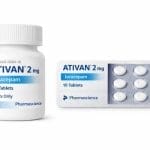
Ativan is the widely recognized brand name for lorazepam, a mid potency benzodiazepine with a well established clinical track record spanning more than four decades of medical use. Lorazepam belongs to the class of positive allosteric modulators of the GABA A receptor complex, the principal molecular target through which gamma aminobutyric acid, the central nervous system’s primary inhibitory neurotransmitter, reduces neuronal excitability across widespread brain circuits. By binding to a specific regulatory site on the GABA A receptor, lorazepam enhances the frequency of chloride ion channel opening in response to GABA binding, amplifying the natural inhibitory effects of GABAergic neurotransmission and producing dose dependent anxiolysis, sedation, muscle relaxation, and anticonvulsant activity.
Several pharmacokinetic properties distinguish lorazepam from other benzodiazepines in clinically important ways. Lorazepam has an intermediate half life of approximately 10 to 20 hours, shorter than diazepam but longer than oxazepam, that provides sustained anxiolytic coverage without the prolonged accumulation that characterizes longer acting agents. Crucially, lorazepam undergoes direct glucuronidation in the liver without relying on the cytochrome P450 enzyme pathways that mediate the metabolism of many other benzodiazepines, reducing the potential for drug interactions and making it safer in patients with hepatic impairment than many alternatives. It also lacks active metabolites, meaning that the duration of effect corresponds predictably to the known half life of the parent compound.
Ativan in the Treatment Algorithm for Anxiety Disorders
Contemporary clinical guidelines from the American Psychiatric Association, the World Federation of Societies of Biological Psychiatry, and the National Institute for Health and Care Excellence position benzodiazepines including lorazepam as short term anxiolytics that serve a defined and important but temporally limited role within the broader management of anxiety disorders. The first line long term pharmacological treatments for most anxiety disorders, selective serotonin reuptake inhibitors and serotonin norepinephrine reuptake inhibitors, require two to six weeks of consistent administration before producing clinically meaningful anxiolytic effects, creating a treatment gap during which patients may experience severe, functionally impairing anxiety that threatens treatment adherence and patient safety.
Ativan bridges this treatment gap with remarkable effectiveness, providing immediate anxiolytic relief within 15 to 30 minutes of oral administration that persists for six to eight hours at standard doses. This rapid onset is a key clinical advantage in the anxiety disorder context, where patients in acute distress cannot afford to wait weeks for a medication to take effect and where the experience of uncontrolled symptoms can undermine trust in treatment and drive disengagement from care. By providing immediate relief, Ativan maintains functional capacity and treatment engagement during the critical early weeks of long term treatment establishment.
Generalized Anxiety Disorder and Lorazepam
For generalized anxiety disorder, characterized by chronic, pervasive, excessive worry across multiple life domains accompanied by physical symptoms including muscle tension, restlessness, sleep disturbance, and irritability, lorazepam provides symptomatic relief that directly addresses the neurobiological hyperarousal underlying the condition. The typical dosing regimen for GAD involves 0.5 to 1 mg two to three times daily, with dose titration based on therapeutic response and tolerability. The intermediate half life of lorazepam supports twice or three times daily dosing that maintains relatively stable plasma concentrations throughout the waking day, reducing the interdose anxiety that can complicate treatment with shorter acting agents.
Patients who choose to buy Ativan for generalized anxiety disorder should do so exclusively within the context of a formal clinical evaluation and ongoing medical supervision. The treating clinician should conduct a thorough assessment of the anxiety disorder’s severity, functional impact, and differential diagnosis before prescribing, and should establish a clear treatment plan that includes the intended role and duration of lorazepam therapy, the concurrent or subsequent implementation of evidence based psychological treatment, and a structured plan for eventual dose reduction and discontinuation.
Social Anxiety Disorder and Performance Anxiety
Social anxiety disorder, the persistent and intense fear of social or performance situations in which one might be evaluated negatively by others, creates a distinctive pattern of contextual anxiety that can be severe in specific triggering situations while relatively manageable between them. The anticipatory anxiety that builds in the hours or days before feared social events, and the acute anxiety experienced during them, can reach intensities that are severely impairing and that prevent participation in important social, occupational, and personal activities.
Short term lorazepam use can provide targeted relief for specific high stakes social situations, a public presentation, an important interview, a social gathering, enabling participation that would otherwise be avoided and providing the successful exposure experiences that gradually reduce conditioned social fear over time. This strategic situational use is distinct from regular daily dosing and carries a different risk benefit profile that may be favorable for carefully selected patients whose social anxiety is primarily situational rather than pervasive. The prescribing clinician should provide specific guidance about appropriate situational use and monitor for signs of expanding use beyond the originally defined clinical context.
Safety Considerations and Long Term Management
The safety profile of Ativan for anxiety disorders requires careful attention to several clinically important considerations. Tolerance to the anxiolytic effects of lorazepam can develop with regular use over weeks to months, potentially requiring dose escalation to maintain the same degree of symptom control. Physical dependence develops predictably with regular benzodiazepine use, manifesting as a withdrawal syndrome upon abrupt discontinuation that may include rebound anxiety, often more intense than the original anxiety that was being treated, as well as physical symptoms including tremor, diaphoresis, insomnia, and in severe cases seizures.
These considerations underscore the clinical imperative for concurrent psychological treatment that builds anxiety management skills capable of sustaining improvement after lorazepam is eventually withdrawn. Cognitive behavioral therapy for anxiety disorders has a robust evidence base and produces durable treatment gains that persist long after the conclusion of active treatment, a quality that pharmacological treatment alone cannot match. The optimal long term strategy for anxiety disorders is one in which lorazepam provides the rapid symptom relief that enables engagement with CBT, while CBT builds the lasting cognitive and behavioral skills that enable safe lorazepam discontinuation.
Conclusion
Ativan (lorazepam) is a clinically valuable and evidence supported pharmacological option for the management of anxiety disorders and severe anxiety symptoms, offering rapid, reliable anxiolytic efficacy through a well characterized mechanism that has been refined through decades of clinical experience. Its pharmacokinetic profile, intermediate half life, no active metabolites, minimal drug interaction potential through non CYP mediated metabolism, distinguishes it favorably from many alternatives within the benzodiazepine class. When used judiciously within a comprehensive treatment plan that prioritizes concurrent psychological therapy and structured dose limitation, those who buy Lorazepam for anxiety management can experience meaningful and functionally significant symptom relief as part of a carefully designed pathway to lasting recovery.