

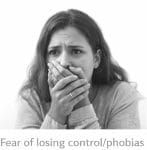
The Fear of Fear: How Anticipatory Anxiety Drives Panic Disorder
One of the most paradoxical features of panic disorder is that the fear of having a panic attack often becomes more disabling than the panic attacks themselves. This “fear of fear” — technically called anticipatory anxiety — creates a self-reinforcing cycle in which vigilance for panic sensations, catastrophic interpretations of normal bodily fluctuations, and desperate avoidance behaviors combine to maintain and intensify the disorder. Understanding this cycle is central to effective panic disorder treatment.
The fear of losing control during a panic attack is among the most universal and distressing cognitive features of the condition. Patients describe terrifying fears of going insane, becoming permanently incapacitated, embarrassing themselves in public, or losing the ability to care for themselves or their families. These fears, while genuinely frightening, are based on catastrophic misinterpretations of what panic attacks actually are and what they actually do.
Panic attacks do not cause insanity, permanent brain damage, or loss of behavioral control. The intense dysphoria and disorientation of a severe panic attack can feel like mental dissolution, but the neurological reality is a temporary activation of stress circuits that resolves completely — leaving no lasting damage. Providing accurate psychoeducation about this fact, and then experientially confirming it through exposure-based treatment, is one of the most powerful components of panic disorder therapy.
The cognitive model of panic disorder, developed by David Clark, proposes that panic disorder is maintained by a specific pattern: physical sensations (heart rate increase, dizziness, shortness of breath) are catastrophically misinterpreted as signs of immediate physical or mental catastrophe. This misinterpretation amplifies anxiety, which intensifies the sensations, which leads to further catastrophizing — the spiral that produces a full panic attack. Effective treatment interrupts this cycle at the cognitive and behavioral levels.
Illness Anxiety and Panic: When Health Fear Drives Panic Episodes
Illness anxiety disorder (formerly called hypochondriasis) and health anxiety involve excessive preoccupation with having or acquiring a serious illness, despite medical reassurance. The constant vigilance toward bodily sensations that characterizes health anxiety creates a direct pathway to panic attacks — any slightly unusual physical sensation (a skipped heartbeat, a headache, chest tightness) is interpreted as evidence of serious disease, triggering fear that escalates into panic.
Many patients with panic disorder have significant health anxiety as a comorbidity. The pounding heart and chest tightness of a panic attack are repeatedly and convincingly experienced as signs of a heart attack. The dizziness and breathlessness suggest stroke or brain tumor. Each panic attack reinforces the health fear, and the health fear maintains the vigilance that triggers more panic attacks.
This pattern frequently leads to repeated medical evaluations — emergency room visits, cardiologist referrals, extensive testing — that provide temporary reassurance but do not treat the underlying anxiety disorder. Brief reassurance from medical tests relieves anxiety momentarily but does not address the anxious interpretive process, which soon latches onto the next ambiguous sensation.
Effective treatment for health anxiety comorbid with panic disorder requires addressing both the panic disorder itself and the specific health-related cognitive distortions. CBT for health anxiety includes cognitive restructuring of catastrophic interpretations, selective attention training to reduce body checking behaviors, response prevention (reducing reassurance-seeking), and graduated exposure to health-anxiety-provoking situations and sensations.
Specific Phobias and Situational Panic Attacks
Specific phobias — intense, irrational fears of specific objects or situations that are disproportionate to the actual threat — are the most prevalent anxiety disorders in the general population. Common specific phobias include fears of animals (particularly spiders, snakes, insects, and dogs), natural environments (heights, water, storms), blood-injection-injury (needles, medical procedures, blood), and situational phobias (enclosed spaces, flying, driving).
Panic attacks are common in specific phobias — when a phobic individual encounters their feared stimulus, the acute fear response can escalate to full panic attack intensity. The panic attack in a specific phobia is contextually clear: the person and those around them can typically identify the trigger. This contextual clarity, while not lessening the distress, actually makes specific phobia more amenable to exposure-based treatment than unexpected panic attacks.
Agoraphobia — which commonly co-occurs with panic disorder — involves fear and avoidance of situations from which escape might be difficult or help unavailable in the event of a panic attack. Common agoraphobic situations include public transportation, open spaces, enclosed spaces such as shops, crowds, and being outside the home alone. In severe agoraphobia, patients may become completely housebound — a devastating functional consequence of untreated panic disorder.
The behavioral avoidance driven by phobias and agoraphobia is arguably the most disabling feature of these conditions. Every avoided situation maintains and often strengthens the fear, gradually contracting the person’s world. Recovery requires systematic, gradual reengagement with feared situations — with appropriate therapeutic and pharmacological support to make this process manageable.
Clonazepam and Xanax as Supports for Exposure-Based Therapy
For patients with phobia-related or agoraphobia-related panic attacks undergoing exposure-based treatment, prescription benzodiazepines including Clonazepam and Xanax are sometimes used as pharmacological supports — though their role in the exposure context requires careful consideration and clinical judgment.
The rationale for using benzodiazepines alongside exposure therapy is to reduce the anxiety barrier to engaging with feared situations, particularly at the beginning of treatment when avoidance is strongest and anxiety most intense. A patient with severe agoraphobia who has been housebound for months may find the prospect of leaving home so terrifying that they cannot engage with exposure exercises without some pharmacological support. In this context, low-dose Clonazepam (with its sustained, smooth anxiolytic coverage) may help lower the anxiety enough to make initial exposure exercises achievable.
However, an important counterpoint exists: if the benzodiazepine is always present during exposures, the patient’s nervous system may attribute the safety experienced during exposure to the medication rather than to the learning that feared situations are actually safe. This can limit the generalization of exposure learning and create dependence on the medication for continued functioning. Ideally, benzodiazepines used as exposure supports are gradually withdrawn as tolerance for exposure-related anxiety increases.
As-needed Xanax for acute panic episodes during exposure is sometimes appropriate for patients with severe panic disorder, particularly when panic attacks during exposure are so intense that they are traumatizing rather than therapeutic. The prescribing clinician and therapist should coordinate closely on the use of benzodiazepines in the exposure context.
Interoceptive Exposure: Confronting the Fear of Physical Sensations
For patients whose panic is driven by fear of the physical sensations themselves — racing heart, dizziness, breathlessness — interoceptive exposure is a highly effective and evidence-based component of CBT for panic disorder. Interoceptive exposure involves deliberately inducing the feared bodily sensations in a safe, therapeutic context to demonstrate that the sensations are not dangerous, reduce the fear of them, and build tolerance.
Common interoceptive exposure exercises include spinning in a chair to induce dizziness, breathing through a coffee stirrer straw to produce breathlessness, staring at a spot on the wall to induce derealization, running in place to elevate heart rate, and drinking coffee to produce caffeine-related arousal. Each exercise targets specific feared sensations at escalating intensity.
The therapeutic mechanism of interoceptive exposure is extinction of the conditioned fear response to internal sensations. Through repeated, unrescued exposure to sensations that are experienced as threatening but are actually harmless, the nervous system learns that these sensations are not predictors of catastrophe — and the panic response to them extinguishes. This learning occurs at a neurobiological level, producing changes in amygdala reactivity and cortical regulation that persist after treatment.
Interoceptive exposure is most effective when practiced regularly and systematically, beginning with less feared sensations and gradually progressing to more feared ones. The therapist guides the patient through a hierarchy of exercises, providing support, debriefing each exposure to extract maximum therapeutic benefit, and monitoring progress carefully.
Cognitive Techniques for Managing Catastrophic Fear During Panic
Alongside behavioral exposure, cognitive techniques are essential for managing the catastrophic fear that drives panic in the context of phobias, illness anxiety, and fear of losing control. Cognitive restructuring — the core cognitive technique in CBT — involves identifying the specific catastrophic thought (e.g., “My heart is pounding, I am having a heart attack”), evaluating the evidence for and against it, and developing a more balanced and realistic alternative (e.g., “My heart is racing because I’m anxious. This is unpleasant but not dangerous. It will pass.”).
Thought records — structured worksheets that help patients document and analyze their catastrophic thoughts — make the cognitive restructuring process systematic and learnable. With practice, patients internalize the balanced perspective and become able to apply it rapidly during the onset of panic, interrupting the cognitive escalation before it reaches full panic intensity.
Decatastrophizing is a specific cognitive technique that walks the patient through their feared outcome — “If the worst happened, what would actually occur? How would you cope? What is the realistic probability of this outcome?” — in a way that reveals the actual (much lower) risk of the feared catastrophe and identifies coping resources the patient genuinely possesses. Patients typically find that their feared catastrophes are far less likely and far more manageable than their anxiety leads them to believe.
Behavioral experiments — designing real-world tests of catastrophic predictions — provide the most powerful disconfirmation of anxious beliefs. A patient who believes that entering a shopping mall will inevitably lead to a panic attack from which they cannot escape designs an experiment to test this prediction — going to the mall, staying for a defined period, and observing what actually happens. When the predicted catastrophe does not materialize, the belief loses credibility and anxiety decreases.
Working With Your Healthcare Team for Comprehensive Panic Disorder Treatment
Recovery from panic disorder driven by fear of losing control, illness anxiety, or specific phobias requires a coordinated team approach. A psychiatrist or primary care physician provides diagnostic evaluation and manages pharmacotherapy — including prescribing medications such as Clonazepam or Xanax when clinically indicated as part of a comprehensive plan. A psychologist or trained cognitive-behavioral therapist delivers the evidence-based psychotherapy that addresses the cognitive, behavioral, and emotional components of the disorder. A pharmacist ensures safe dispensing of controlled substances, reviews for drug interactions, and provides counseling on medication use.
Communication among team members significantly enhances outcomes. The therapist’s perspective on the patient’s progress in exposure therapy can inform the prescriber’s decisions about benzodiazepine dosing and duration. The prescriber’s knowledge of medication effects informs the therapist’s understanding of how pharmacotherapy is interacting with the therapeutic process.
Patients benefit enormously from being active, informed participants in their care — understanding their diagnoses, the rationale for each component of treatment, and their own role in recovery. Panic disorder is highly treatable, and the combination of appropriate pharmacotherapy (including prescription medications like Clonazepam and Xanax when indicated), evidence-based psychotherapy, and supported lifestyle modification gives the vast majority of patients a realistic path to significant symptom reduction and restored functioning.
Conclusion: Overcoming Fear-Driven Panic Through Comprehensive Care
Fear of losing control, illness anxiety, and specific phobias are powerful drivers of panic attacks that respond well to evidence-based treatment. Prescription medications including Clonazepam and Xanax provide important support within comprehensive treatment plans — managing acute panic and reducing the anxiety barrier to therapeutic engagement — while CBT addresses the cognitive and behavioral foundations of the disorder. With persistence, appropriate professional support, and access to evidence-based treatment through qualified healthcare providers and licensed pharmacies, recovery from fear-driven panic disorder is an achievable and realistic goal.
Related posts:
 Panic Attacks and Panic Disorder: From Crisis to Recovery With the Right Treatment
 Stress, Overwhelm, and Panic Attacks: How High-Pressure Life Situations Trigger Anxiety Episodes
 Anxiety Disorders and Panic Attacks: Understanding GAD, Social Anxiety, and Prescription Treatment Options
 Trauma, PTSD, and Panic Attacks: Understanding the Connection and Finding Effective Treatment