

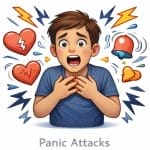
What Is a Panic Attack? Recognizing the Emergency That Isn’t One
A panic attack is one of the most terrifying experiences a person can have, and simultaneously one of the most physically harmless. During a panic attack, the body’s fight or flight response activates completely and suddenly, flooding the system with adrenaline and producing an intense surge of physical and psychological symptoms: heart pounding or racing, chest tightness or pain, shortness of breath, dizziness or lightheadedness, trembling, sweating, nausea, numbness or tingling, a feeling of unreality or detachment (derealization or depersonalization), and an overwhelming sense of impending doom, the conviction, in the moment, that death or catastrophic loss of control is imminent.
The physical symptoms of a panic attack are so severe and so similar to those of cardiac emergencies that first time sufferers frequently call 911 or go to emergency departments, convinced they are having a heart attack or stroke. Emergency workups invariably return normal, the heart is racing but not diseased; the lungs are hyperventilating but not diseased; the brain is activating every alarm it possesses but is not in danger. This is both reassuring and confusing: the experience was clearly real and clearly extreme, but there was no physical threat to explain it.
Panic disorder develops when panic attacks recur unexpectedly and the person begins to persistently worry about having additional attacks or their consequences, changing behavior to avoid situations associated with attacks or that would be difficult to escape if an attack occurred. This anticipatory anxiety and avoidance behavior can progressively restrict daily life: avoiding driving, crowded places, exercise, or any situation where a panic attack might occur or be embarrassing. When panic disorder is accompanied by avoidance of a wide range of situations, agoraphobia has developed, a significantly impairing condition that can eventually prevent people from leaving their homes.
First Line Medications: Benzodiazepines for Acute Attacks
For the acute management of panic attacks, the immediate interruption of an active episode, benzodiazepines are the fastest and most reliable pharmacological option. Their rapid onset of action (15–30 minutes for most oral formulations) makes them specifically suited to the acute, episodic nature of panic attacks, which peak within 10 minutes and typically resolve within 20–30 minutes. A benzodiazepine taken at panic attack onset can abort the episode more rapidly and reduce its peak severity.
Alprazolam (Xanax) is FDA approved for panic disorder and among the most commonly prescribed benzodiazepines for this indication. Patients who buy Xanax online from a licensed pharmacy for panic disorder have immediate access to a well established, reliable acute panic management medication. The immediate release formulation is used for acute attack management; the extended release formulation (Xanax XR) is used for consistent panic prevention with more stable plasma levels throughout the day.
Clonazepam (Klonopin) is another benzodiazepine with FDA approval specifically for panic disorder, valued for its longer half life (18–50 hours) that provides more sustained coverage than shorter acting alprazolam. Many patients find that the ability to buy Klonopin online from a certified pharmacy for consistent twice daily dosing produces more stable panic suppression than the multiple daily dose requirements of shorter acting agents. Lorazepam (Ativan), available for patients who buy it online through licensed pharmacies, offers another intermediate option with reliable anxiolytic potency and good tolerability.
Antidepressants: Long Term Panic Prevention
For long term panic disorder management, reducing the frequency of panic attacks, eliminating anticipatory anxiety, and reversing avoidance behavior, SSRIs and SNRIs are the recommended first line pharmacological treatment. Paroxetine (Paxil) and sertraline (Zoloft) have specific FDA approval for panic disorder; escitalopram, fluoxetine, and venlafaxine are widely used with strong evidence despite off label status.
These medications require 2–6 weeks of consistent daily dosing to produce full anti panic benefit, a latency that reflects the gradual neuroplastic changes in serotonergic and noradrenergic regulation of amygdalar and prefrontal circuits rather than immediate receptor occupancy effects. During this initiation period, a benzodiazepine may be prescribed concurrently for acute attack management while the SSRI/SNRI takes effect, a standard combination approach that is then tapered as the longer acting agent reaches full efficacy.
A critical prescribing caution with SSRIs in panic disorder: these medications can produce transient initial activation, increased anxiety, jitteriness, or even worsening panic attacks, during the first 1–2 weeks. Starting at very low doses (half the standard starting dose, e.g., sertraline 12.5–25mg rather than 50mg) and increasing gradually dramatically reduces this activation risk. Patients should be specifically counseled to expect this possibility so that initial activation does not lead to premature medication discontinuation.
Cognitive Behavioral Therapy: Addressing the Cycle
Panic focused cognitive behavioral therapy is as effective as pharmacotherapy for panic disorder and produces more durable long term outcomes, with lower relapse rates after treatment discontinuation than medication alone. CBT for panic disorder targets two key maintaining mechanisms: catastrophic misinterpretation of physical sensations (interpreting a racing heart as a sign of cardiac emergency rather than autonomic arousal) and avoidance behavior that prevents the natural habituation to feared sensations.
Interoceptive exposure, deliberately provoking the physical sensations associated with panic (hyperventilation, vigorous exercise, spinning) in a controlled therapeutic context, is a highly effective but often initially intimidating CBT component that directly addresses the fear of physical sensations. By repeatedly experiencing the sensations without catastrophe, patients learn experientially that the sensations are uncomfortable but not dangerous, breaking the catastrophic interpretation cycle that escalates normal physiological arousal into full panic.
Applied relaxation techniques, diaphragmatic breathing, progressive muscle relaxation, paced breathing during early stage anxiety, provide practical tools for reducing the physiological arousal that can trigger or amplify panic attacks. These skills complement both pharmacological treatment and exposure based CBT, giving patients an active sense of control over their own arousal regulation rather than the passive helplessness that untreated panic disorder can impose.
Recovery from Panic Disorder: What Full Treatment Looks Like
Recovery from panic disorder is achievable for the vast majority of patients with appropriate treatment, approximately 70–90% of patients achieve significant improvement with CBT, pharmacotherapy, or their combination. Full recovery involves not only reduction in panic attack frequency but elimination of anticipatory anxiety, reversal of avoidance behavior, and restoration of normal daily activities that panic disorder had restricted.
For patients managing panic disorder with medications obtained through their licensed pharmacy, whether buying benzodiazepines online for acute management or antidepressants for prevention, regular follow up with the prescribing physician allows dose optimization, monitoring of treatment response, and coordinated planning for eventual medication tapering. The goal of pharmacological treatment in panic disorder is not indefinite maintenance but support through the acute phase and through CBT engagement, after which many patients successfully taper and discontinue medication while maintaining recovery.
Panic disorder, when untreated, tends to worsen over time as avoidance compounds and life restriction increases. With comprehensive treatment, the trajectory reverses dramatically: panic attack frequency decreases, anticipatory anxiety diminishes, avoidance behaviors resolve, and the full range of activities that panic disorder had restricted becomes accessible again. Accessible, affordable treatment through licensed pharmacy channels, combined with evidence based psychotherapy, makes this recovery trajectory available to the millions of Americans managing panic disorder.
Related posts:
 Stress, Overwhelm, and Panic Attacks: How High-Pressure Life Situations Trigger Anxiety Episodes
 Anxiety Disorders and Panic Attacks: Understanding GAD, Social Anxiety, and Prescription Treatment Options
 Trauma, PTSD, and Panic Attacks: Understanding the Connection and Finding Effective Treatment
 Brain Chemistry, Hormones, and Panic Attacks: The Neuroscience Behind Anxiety Episodes